
|
The end of the financial year is fast approaching. Below we have put together a few tips for you to help your business tax return.  Write off bad debts
It is important to regularly review unpaid debts owed to your business, also known as 'aged receivables'. If you have debtors that are uncontactable, in liquidation, or otherwise are unlikely to make payment, this may be considered a "bad" debt. You must have done everything possible to contact the debtor and try to recover the amount owing. If you have a number of these, make sure you write-off the bad debts in your accounting software prior to June 30th 2023, in order to potentially be able to claim as a deduction in your 2023 tax return. Pay June quarter super Superannuation payable to your employee's super funds for the April to June quarter can only be included in your business tax return as a deduction, if it has been received by the funds by June 30th. Processing times vary for different software, banks and super funds. Although it is will not yet be due for payment, if you want this included as a deduction, payment should be made by June 21st to allow for this. Instant asset write-off The instant asset write-off threshold will reduce to $20,000 as of the 1st of July 2023. In order to take advantage of the soon to change full cost write-off in your 2023 tax return, you will need to have purchased an asset and have it installed and/or ready to use by your business, by the 30th of June this year. Remember, the key to all of the above tips, is to action them before June 30th! All businesses circumstances vary so as always, get in touch with any questions you may have, or to book in a tax planning session with our experts. The Federal Treasurer Jim Chalmers handed down the 2023 Federal Budget on 9 May 2023 with the focus being on helping households through the cost of living crisis. Cost of living measures total $14.6bn, including, $3bn of energy bill relief, $3.5bn on Medicare bulk billing incentives, $4.9bn for an across-the-board Jobseeker increase and increasing rent assistance by 15%. Other areas of focus include Medicare, improving aged care services (including $11.3bn for a 15% award pay increase) and supporting the energy transition through incentives to small business for green investments We have put together the key points relating to businesses and superannuation below to keep you in the loop.  Businesses
View the full budget and related documents here.  The stresses of everyday life can often become overwhelming, particularly when you are trying to manage your small business efficiently and provide your customers with the best experience possible.
The list of what you need to do, and all the ‘want to do’s’, can seem never ending at times. We often write off the difficulties we may be facing as ‘tomorrow’s problem’, but it is essential that you take a step back and check in on your wellbeing and mental health during stressful periods. When stress at work is left unchecked, it can easily begin to affect your life and relationships outside of work. From deadlines to staffing issues and working long hours, you may sometimes feel that the world is on your shoulders. Watch out for the signs of stress getting on top of you:
We have compiled a list of ways that you may be able to practically tackle your stress levels within the workplace.
Ask for Help Whether you run your own business or are an employee, there are always options and ways to seek help with your stress load in the workplace.
It is important to remember that asking for help is a sign of strength, not weakness. We all need it sometimes. If things are getting on top of you, don’t be afraid to reach out to services such as Beyond Blue: a national mental health organisation that provides support for individuals experiencing stress, anxiety, and depression. They offer a range of resources, including a helpline, online chat, and self-help tools. Think you need to lighten the load? We are here to help our clients – reach out to us to discuss what we can do to help with your bookkeeping needs. The time has come for us to get into the nitty gritty of Single Touch Payroll (STP) Phase 2. What is Single Touch Payroll? If you missed the memo, Single Touch Payroll or STP, is a process of electronic data reporting that Australian businesses use to share data with the Tax Office. If you have STP-enabled payroll or accounting software, it easily sends the ATO vital reports on things like salaries and wages, pay as you go (PAYG) withholding and superannuation liability. The STP process began a few years ago and the reporting items have been expanded for mutually beneficial reasons. Below we’ll discuss some of the critical changes for phase two of STP.  Does knowing about STP 2 matter to you?
If you have already engaged Preston Corporate Accounting to process Single Touch Payroll on your behalf, you’re all set. We’ll take care of the Phase 2 process for you. The details below are just for your information. For those clients that prepare their payroll themselves, we hope this article is helpful. Please remember that we are here for you as a resource if you need assistance at any time. Phase 2 has already begun The purpose of STP’s second phase is to provide the different government departments with more detailed and current information to help improve the delivery of government services. The adoption of STP 2 is a compulsory government requirement and came into force on the 1st January 2022. However, users of Xero have until the 31st March 2023 and MYOB had an extension to the 31st December 2022. In summary, your accounting or payroll software (Xero, MYOB or QuickBooks) will provide you with the structure needed for the data input. However, you will need to increase your payroll skills to ensure the data you enter is correct. So many labels and codes! There are now many labels and codes to input for each employee. Understanding these codes is important; it will affect the employees’ government benefits and income tax basis. This includes things like child support and Services Australia entitlements. There are 86 codes to choose from and it is important that you choose the right one for each employee. There are quite a lot of labels and codes that need to be correctly selected to properly process payroll under STP 2. Here is the list:
STP 2 implementation checklist If we aren't processing your STP, it is important that you approach the implementation of STP 2 in a structured manner and follow a checklist like the one below.
Click on your software below for information to help guide you through the process: Xero MYOB Quickbooks Where to from here? Don’t panic! Help is at hand. Now is the time to get an understanding of, and more detail on STP 2. Don’t wait until the last minute as there may be penalties. Your payroll software will determine the commencement date, so ensure you are on top of their progress. Our bookkeepers will be available to assist you in your setup, so don't hesitate to call us on (08) 9367 4199 if you need to.  Maintaining positive cash flow is essential for any business, big or small. Your business can experience some big problems when dealing with late payments, so it’s important to be proactive to stay on top of your invoicing.
If you struggle with consistent late payments from your clients, here are some simple actions you can take that can really help. Don’t delay your invoices Your clients can't pay you if they don’t have your invoice. So be quick to send it to them. Customers are often more prompt in paying when they’ve just received the goods or services from you, so don’t delay. Cash in on that goodwill. Provide a detailed invoice Your invoice needs to have all the right information included. This includes your business details, their business details, payment instructions, description of the work or product, date of delivery, and any customer requirements like purchase order numbers. You also want to have a clear due date. Ask for prompt payment Many clients may be used to having weeks to pay invoices, but that’s changing. Over a third of businesses in Australia request payment within a week. It helps set an expectation of prompt payment. Make it easy to get paid Your clients will typically pay faster if they can use their preferred payment method. Consider offering various options, including cash, bank transfer, credit card or PayPal. You want as few barriers between you and your payment as possible. Don’t forget to chase payments You’re not done when the invoice is sent. You’ll still need to follow up with the client to ensure the payment has been processed. Have a system that lets you know when an invoice comes past due and give them a call. Don’t let them forget or think that you forgot. Withhold delivery until payment If you have new clients or clients with a history of late payments, consider switching up the process. Invoice them first, and don’t deliver the final service or product until you've been paid. This prevents the client’s ability to pay late or try to avoid paying completely, and it’s common practice for many businesses and services now. Consider direct debit arrangements If you have clients whom you work with or service on a regular basis, consider an agreement where you can charge their bank or card from your end. We do this with many of our clients because it makes it easier and faster for both of us. It’s important to remember that you provide a valuable service or product to your clients. And that should never be taken for granted. You deserve to be paid efficiently and professionally. And don’t forget, you can always talk to us about your invoicing system and business practices. We can help you streamline things and get you paid faster. As a new year begins, we often make new year resolutions for our personal goals, however, planning for the new year in your business is also very important. It sets the tone for the year and what you are wanting to focus on. What business goals do you want to accomplish in 2023? Have you considered calling our experienced Business Advisor Michele to arrange a 2023 Strategic Planning Workshop? 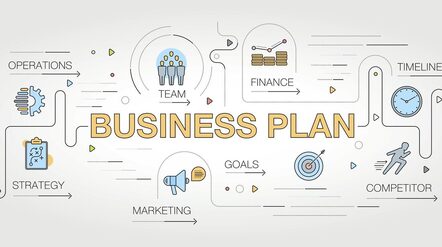 What are your business goals for the year ahead?
The beginning of a new calendar year is an excellent time to review the year just finished and reflect on what worked, what didn’t, what you’d like to change and new things you’d like to implement. Last year, there were inescapable impacts on businesses, with some thriving, others failing, and others just getting by. So, what kind of year was 2022 for your business? Take the time to review the year and acknowledge all that has happened, good, bad or indifferent. Examining the year with an objective perspective can provide valuable insights to prepare for the next business year. Planning and goal setting will help provide a focus for your business efforts. Your yearly business review
While there are many metrics you could evaluate to track business performance, we’ve given you just a few ideas to inspire your business planning for 2023. If you’d like to chat about what you can do differently this year to enable your business to thrive, book a time with us today.  Common tax deductions for small business Are you claiming all the business tax deductions that you are entitled to? There are many expenses common to most small business, and there are other expenses that are specific to the nature of the goods or services that your business provides.
Some common expenses that are not deductible are fines and penalties, provisions for employee leave, donations to entities not registered as deductible gift recipients and entertainment.
There may be some expenses you want to check with us such as private usage of business vehicles, prepaid expenses, bad debts, loss of stock and borrowing expenses. We’ll make sure to include all the deductions you’re entitled to. What’s on the ATO’s radar? This year the ATO will be taking a closer look at record keeping, work related expenses, rental property income and deductions and cryptocurrency transactions.
We can check your business’s eligibility for concessions, offsets, employer incentives and rebates and make sure your business is calculating taxable income correctly, so you don’t pay more tax than you need to! It’s important to get the allowable tax deductions right for your business and get in early for your tax return. This way you get more time to plan for payment, or if you are due a refund you will see it in your bank sooner. Talk to us to see what applies for your business.  Do you know which business metrics and key performance indicators (KPIs) to implement and track? We can help you set up a custom KPI dashboard to manage the future path of your business, including numerical, financial and non-financial data. Michele Rawlins, part of our team at Preston Corporate, can help you create your own KPI management dashboard.
Once you begin trading, you’re faced with the challenge of successfully managing the course of your business and making sure it’s a profitable enterprise. It’s easier to manage sales and finances when you have access to the best possible information and data about your performance. Tracking specific metrics and key performance indicators (KPIs) allows you to see how you're performing against your targets – so you can take action to improve performance, sales, growth and profitability. But which KPIs should you be tracking? Sales and conversion rates An obvious metric to track is the number of sales you’re making each month. Hopefully you have set a target for these sales in your business plan, so it’s important to record each sale and see how the business is performing over the current 12 months compared to the last 12 months of trading. It’s also important to log and track the drivers that lead to these sales. How many sales enquiries are you receiving? How many of these enquiries are being converted into actual sales? How many customers are being engaged by your marketing campaigns and is this engagement leading to interest in your products and/or services. The more detail you can track from your sales and marketing activity, the more forensic you can get with which campaigns are actually delivering the goods. Sales revenue and other revenues When customers buy your goods, this generates income (or revenue) for the business. Ultimately, no business can succeed unless it’s generating enough revenue to keep the wheels turning, so tracking your sales revenue is a vital measure of your financial health. Tracking your various revenue streams over time keeps you in control of your finances and helps you make the right decisions. You can track performance against your revenue targets and forecast how much working capital you’ll have at a future point in time. This will help you see if there’s enough cash in the bank to fund your current projects and growth plans. Cashflow and ongoing cash position Good cashflow management is all about balancing the process of cash coming INTO the business and cash going OUT of the business. Recording and tracking your cash position is easy to do with the latest cloud accounting software and cashflow apps, so there’s no excuse for not tracking your cash position. Ideally, you want the business to be in a positive cashflow position (with more cash coming in vs. going out). But to achieve this, it’s helpful to see these cash inflows and outflows in real-time. With up-to-date metrics on your cashflow position, you can make informed decisions about spending, payment of bills and where additional cash and funding may be needed. Debtor days and aged debt When customers fail to pay your invoice on time, that creates an aged debt – money that you SHOULD have received but which the customer has yet to pay. An aged debtor report shows you which invoices are unpaid, which customers haven’t paid, and the total size of this debt. Your debtor days number is a metric that shows the average number of days it takes your customers to pay you. Anything above 45 days is bad news, so you want to aim to keep this number between 14 to 30 days, if possible. A large amount of aged debt will leave a hole in your cashflow – and that can quickly start to impact on the day-to-day running of the business. Gross profit margin Generating a profit is crucial to the continued success of any business and having metrics to measure your profitability is an important part of managing your finances. One common way to do this is to track your gross profit margin. This shows the amount of profit made BEFORE you deduct things like overheads. It’s important to show, as a percentage, the cost of goods sold (COGS) so that you can monitor the changes. The formula for calculating your gross profit margin looks like this: Gross Profit Margin = Gross Revenue minus COGS, divided by Net Revenue, multiplied by 100
By keeping a close eye on these financial metrics and KPIs, you have the best possible insight into the performance of your business – and that’s invaluable as your business journey unfolds. If you’re at the early stages of planning out your business idea, please do get in touch with us. We’ll help you set up a custom KPI dashboard to manage the future path of your business and also offer training in Xero accounting software to keep you on the right track.  Are you making the most of your investment property? Getting the income and allowable tax deductions right can be a confusing task. We’ll help explain the details below so that you’re claiming all you can. Income to declare
All income earned from each property must be declared. If you have multiple properties, keep the records for each property separate to make preparation of the tax return more efficient.
Tax deductions Deductible expenses are different for residential and commercial properties. Not all expenses related to owning a property are allowable as deductions, so it’s important to check what you can claim. Expenses you may be able to claim this year
Other expenses There are some expenses which need to be claimed over a longer period of several years or decades. These can include borrowing expenses, capital expenditure, depreciation, initial repairs and capital works. Some expenses cannot be claimed for. These include stamp duty, loans and repayments, some legal expenses and some insurance premiums. Get help to simplify your property records Tax matters for property investors can be complex. The ATO keeps a close eye on tax returns that involve property investment, as it’s easy to make mistakes. There are other matters to consider such as the period of rental availability, private use of the property, capital gains tax, legal contracts and positive or negative gearing. This year for many owners there will be insurance claims because of the flooding in Australia. We’d love to help ensure you are claiming the right deductions to make the most out of your investment property this year and beyond. Contact us to book a time to discuss your tax return and investment deductions. In a crowded marketplace, it can be difficult to make your products and services stand out clearly from the competition. A key way to do this is to focus on building brand awareness and turning your existing customers and targets into advocates for your brand. Sounds simple, doesn’t it? Creating that competitive advantage won’t always be easy, but it is key to carving out a niche and scaling up to meet your customers’ needs. 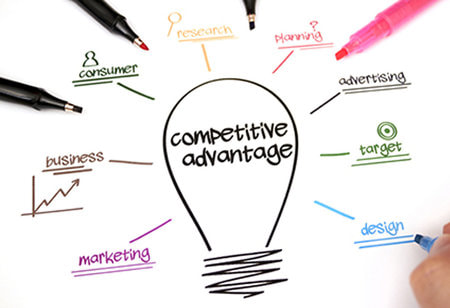 Clearly define your brand values
Once your brand values have been established, use them to guide every business decision from marketing to operations. For example, if sustainability is a core value, this must be reflected in the choices you make on suppliers, packaging, distribution and any causes you associate with. When your company values jump out from your marketing and customer interactions, it makes it easier to resonate with the right customers – which is key to building good relationships. Create a memorable personality for your brand Think about the personality you associate with your favourite brands. Apple is cutting edge, aspirational and techy, while Ben & Jerry’s ice cream is kooky, laid-back and reflects the hippy roots of its founders. How do you want your customers to feel about your brand? Should the personality of your brand sound professional, expert and high class? Or would your audience engage better with a personality that’s warm, approachable and more friendly? Whatever you decide, your tone of voice and the personality of your brand has to be consistent across all channels. Make sure your website, marketing collateral and social media posts all have a uniform feel and represent the brand in a way which can be quickly identified. Have a recognisable brand identity Part of creating brand recognition is having a clear visual appearance for the brand. The logo you use, the style of your web content and the way your packaging is designed all help to make your brand more recognisable to a broader audience. Be creative with your design and decide on a ‘visual identity’ with colours, fonts and imagery that reflect your chosen personality as a brand. If you can commission the images (design or photography) yourself, the result will feel more authentic, but stock image libraries offer lots of choice too. Avoid cliched images that don’t reflect your brand and, wherever possible, aim to create a unique identity that will quickly stand out in your marketplace. Differentiate your brand from the competition Does your product stand out from similar products offered by your competitors? The more unique you can make your offering, the better. You can differentiate by features, price, customer service etc. to make sure you’re the stand-out option for customers in this market. There’s also the option of creating your own niche, where competitors are few and far between. To protect this dominance, it’s important to maintain your high-quality service, to work closely with your customers and to remain at the cutting edge of the specialism. Know your price and how it fits customers' needs Price can be a real differentiator, so you need to be aware how your prices compare to those of your competitors. Is your product cheaper than others? Or are you pitching your price at the top end of the market? It’s important to be clear about whether you’re offering a premium, standard or economy product, and how this fits with your customers’ expectations of the brand. Offering good value for money will be an important draw, so keep an eye on the competitiveness of your prices. Build a valued community of brand advocates Do you have a strong network amongst your customer base, or is a competitor gradually winning market share and undermining your supremacy as the market leader? This needs to be regularly reviewed and assessed. A focus on customer relationships is vital. Offer discounts and unique offers to your long-standing customers to keep them on side. Ask for comments and feedback, so you know what customers want from the brand. And turn your existing customers into advocates for the brand – so they get out in the real world and refer you to the rest of their network. If you would like help working on your Competitive Advantage, please contact Michele on 9367 4199 or michele@prestoncorporate.com.au |
AuthorHelpful articles written by our knowledgeable and experienced team. Archives
March 2024
Categories |
 RSS Feed
Need an appointment?
Looking for help with your business? Need more time to focus on what matters to you? Need advice on growing your business? Preston Corporate provides a wide range of services designed to give you the freedom and the growth you seek.

Copyright © 2022
Located on the Ground Floor, Suite 1, 8 Preston Street, Como WA 6152
Liability limited by a scheme approved under Professional Standards Legislation
Located on the Ground Floor, Suite 1, 8 Preston Street, Como WA 6152
Liability limited by a scheme approved under Professional Standards Legislation